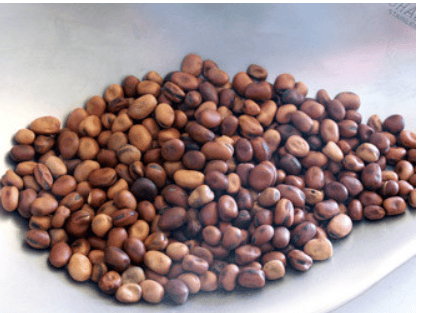
Most people don’t think of beans as a cool season crop, but I’ve learned that fava beans can be one of the most reliable, heavy‑yielding foods I can grow. They love cold soil, they shrug off frost, and they finish early enough that I can still plant all my warm season crops afterward.
So, I will plan on doing something a little different — and honestly, a little exciting. I’ll plant the small seeded fava beans, which will be easier to grow and dry. I’ll plant both of my 5′×32′ garden beds in fava beans. That’s 300 square feet of one of the most productive legumes a homesteader can grow. And the best part? That single cool season crop will give me all the dry beans I need for my Daily Dozen for the entire year.
Let me walk you through how it’ll work.
Why Favas Are Perfect for My Climate
I only get about four hours of direct sun here, tucked up against the trees. That means some crops — like corn — just aren’t realistic. But favas? They thrive in cool weather and don’t need full sun to produce well.
I plant them in mid‑February, and they grow steadily through March and April. By May, the pods are fully formed. Even if they’re still green on the outside, I can cut the whole plant, bundle it, and hang it in my greenhouse to finish drying. That frees up the beds right when I need them for my warm‑season beans and other crops.
How Much Food Two Beds of Favas Produce
Each of my long beds is 5′×32′, should give me:
- 160 sq ft per bed
- 300 sq ft total. Only because I will reserve 5 blocks for snap peas, which also like cool weather
Dry fava beans typically yield 0.3–0.6 pounds per square foot in garden conditions. That means my two beds should produce:
- 100–150 pounds of dry fava beans
That number is important, because…
My Daily Dozen Bean Requirement
I eat 1½ cups of cooked beans every day. That works out to about:
- 0.75 cups dry beans per day
- ≈0.315 lb dry beans per day
- ≈115 lb dry beans per year
So, to meet my Daily Dozen, I need about 115 pounds of dry beans annually.
And my two fava beds will give me 100–150 pounds.
That means:
⭐ My cool‑season fava crop alone will supply my entire year’s worth of beans.
I’ll have enough for:
- Daily Dozen meals
- seed for next year
- emergency pantry storage
- and even a little extra for sharing or experimenting
All from a crop that finishes by May.
What Happens After the Favas Come Out
The beauty of this system is that favas leave behind nitrogen‑rich soil, thanks to their deep roots and nodules. When I cut the plants at the base, the roots stay in the ground and feed the next crop.
After the favas are harvested, I still have time to plant:
- Regular dry beans (June)
- Tomatoes
- Fall brassicas
- Greens
- Root crops
Using both beds for favas doesn’t cost me a single warm‑season crop. It actually improves everything that comes after.
Leaving Space for My Garlic and Winter Onions
Even though I’m dedicating both long beds to favas early in the season, I still make room for my garlic and winter onions, which are a cornerstone of my pantry.
Garlic goes in around October, long after the favas and summer crops are done. Winter onions (my fall‑planted long‑day varieties) also slip into the garden in late fall, where they quietly grow through winter and take off in early spring.
Because these crops have their own timing, I simply reserve a small section of one bed — just enough space for:
- a tidy block of garlic
- a row or two of winter onions
They don’t interfere with the favas at all. In fact, the favas improve the soil for them too. By the time garlic and onions need room, the favas are long gone and the beds are rich, loose, and ready.
This way, I’m not only growing a year’s worth of beans — I’m also keeping my alliums steady and reliable, right on schedule.
Why This Matters for My Homestead
My goal is to grow most of my Daily Dozen foods right here on my property. Beans are one of the most important pieces of that puzzle — they’re filling, nutritious, and store beautifully.
By dedicating my two long beds to favas early in the season, I’m able to grow a full year’s supply of dry beans in a way that fits my microclimate, my sunlight limitations, and my overall homestead plan. And by reserving a little space for garlic and winter onions, I keep my pantry staples rolling in without sacrificing anything.
It’s simple. It’s efficient. And it “should” work. Time will tell. But I will have to learn how to cook and use fava’s but there is plenty of information “out there”. I’ll also grow one 5’x8′ bed with regular dry beans, so I don’t get to bored with favas, but overall, I think this will work.