For a while I found myself looking ahead to a future move and wondering whether it made sense to invest time and money into a garden here in my Northern California yard. It’s easy to get caught up in thoughts about what might come next and put today’s plans on hold.
Eventually I realized that waiting for the “perfect” situation wasn’t helping me grow any food or wasn’t helping my health any. I have a yard now. I have space now. And I have the desire to grow at least some of my own food now.
Rather than waiting for a future property, I decided to make the best use of the space I have available today.
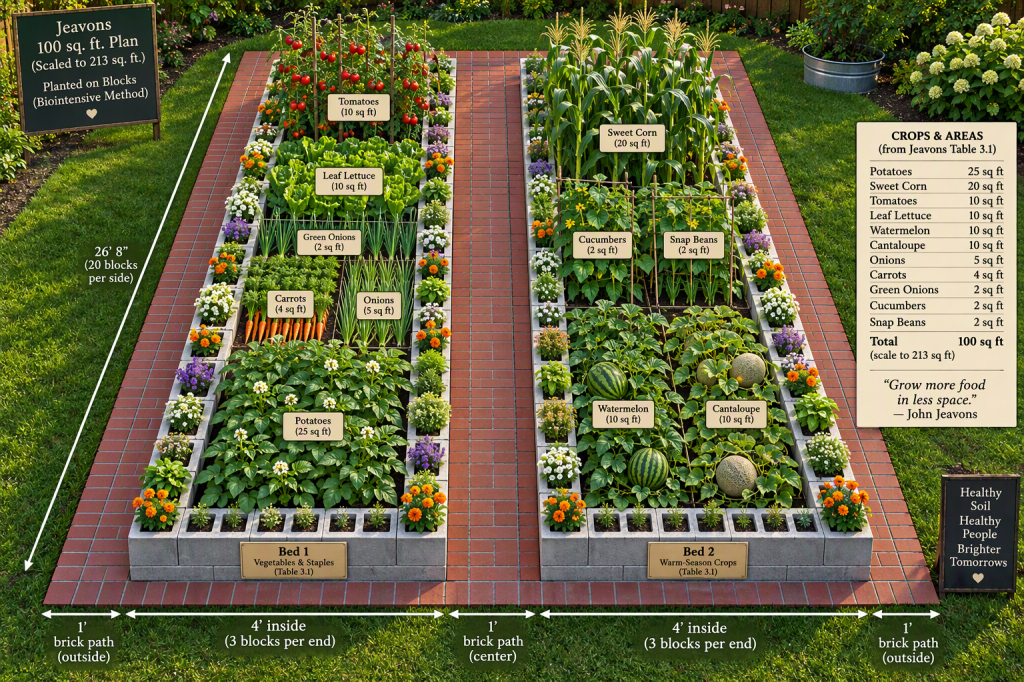
That decision led me to plan to build two raised garden beds in the front yard. The front yard is the only place there is to garden on my property.
Why I Chose Cinder Blocks
Once I committed to creating a garden, I started comparing different raised-bed options. Pressure-treated lumber was the most common choice, and I also considered making beds using concrete molds.
What surprised me was that cinder blocks turned out to be the most affordable option.
Pressure-treated lumber would have required purchasing the lumber that will need replaced in a few years.
The concrete mold option was attractive because it would create permanent beds, but it would also require making forms, mixing concrete, filling molds, waiting for everything to cure, and repeating the process over and over again.
Cinder blocks offered a simpler solution.
The blocks are less expensive than the amount of pressure-treated lumber I would have needed. They require no cutting and no assembly beyond placing them where I want the beds and they would likely last for many years.
A Bonus Benefit
One feature I especially like is the open cores in the cinder blocks.
Instead of leaving those spaces empty, I can fill them with herbs and flowers. That means parsley, chives, basil, oregano, thyme, dill, marigolds, calendula, nasturtiums, and other useful plants can grow around the edges of the beds without taking up valuable space inside the main growing area.
The flowers should also attract pollinators and beneficial insects while adding some color to the garden.
Working With Limited Sunlight
One challenge with this location is sunlight.
The garden is bright, but it is not a full-sun location. During the growing season, it receives only about four hours of direct sun each day. That means I need to be realistic about what crops are likely to perform well.
Instead of trying to grow everything, I am focusing on crops that can still produce reasonably well in partial sun. Leafy greens such as lettuce, spinach, kale, collards, and Swiss chard are natural choices. Root crops like carrots and beets should also do reasonably well.
I do plan to grow tomatoes, but I consider them more of an experiment than anything else.
Tomatoes generally prefer much more sunlight than this garden receives. While I would certainly be happy to harvest a crop of tomatoes, I am not counting on them as one of the primary producers in the garden. If they do well, that will be a welcome bonus. If they struggle, I’ll still have plenty of other crops better suited to the conditions.
Built Around Square Foot Gardening
The beds were designed around the Square Foot Gardening method. Each bed provides roughly four feet of growing width, allowing four planting squares across and approximately twenty-five squares down the length of each bed.
This makes it easier to organize crops, rotate plantings, and make efficient use of the available space. With approximately 200 square feet of growing area between the two beds, there is room for a surprising amount of food production.
My current plan focuses heavily on greens, root crops, soybeans, onions, sweet potatoes, herbs, and a few experimental tomato plants.
Looking Ahead
Will this be my forever garden? Probably not.
But that isn’t really the point.
The point is to make good use of the opportunities I have today instead of waiting for a future that may still be years away.
There is something satisfying about taking an ordinary yard and turning it into a place that produces food. Even if my long-term plans eventually take me somewhere else, the experience I gain, the food I harvest, and the enjoyment I get from gardening will all be worth it.
I have spent a lot of time thinking about moving, and I still believe I need to eventually. But I have also come to realize that I am likely to be here for at least another couple of years. That’s long enough that it no longer makes sense to put my life on hold waiting for whatever comes next.
Instead, I have decided to make the most of where I am today. Yes, I know I have said that before and always want to move forward with my life somewhere else, but truly this is the best decision for me.
That means growing a garden, improving my health, learning new skills, and making this place work as well as it can for me. If an opportunity to move presents itself in the future, I can deal with that when the time comes.
In the meantime, I have a yard, I have soil, and I have time.
Who knows? I may even discover that some of the things I thought were temporary become part of a long-term solution. Either way, the effort won’t be wasted. Every season spent gardening teaches something new, every harvest provides food, and every improvement makes life a little better right now.
Rather than waiting for a future I cannot fully control, I would rather focus on making the best of the opportunities I have today.
AIs rendering of my Block garden: