When I first began planning my new garden, my instinct was to modify everything.
After all, my situation is a little different from the ideal conditions described in many gardening books. My front-yard garden here in Northern California receives only about four hours of direct sunlight each day, and I know some crops will probably perform differently than they would in full sun.
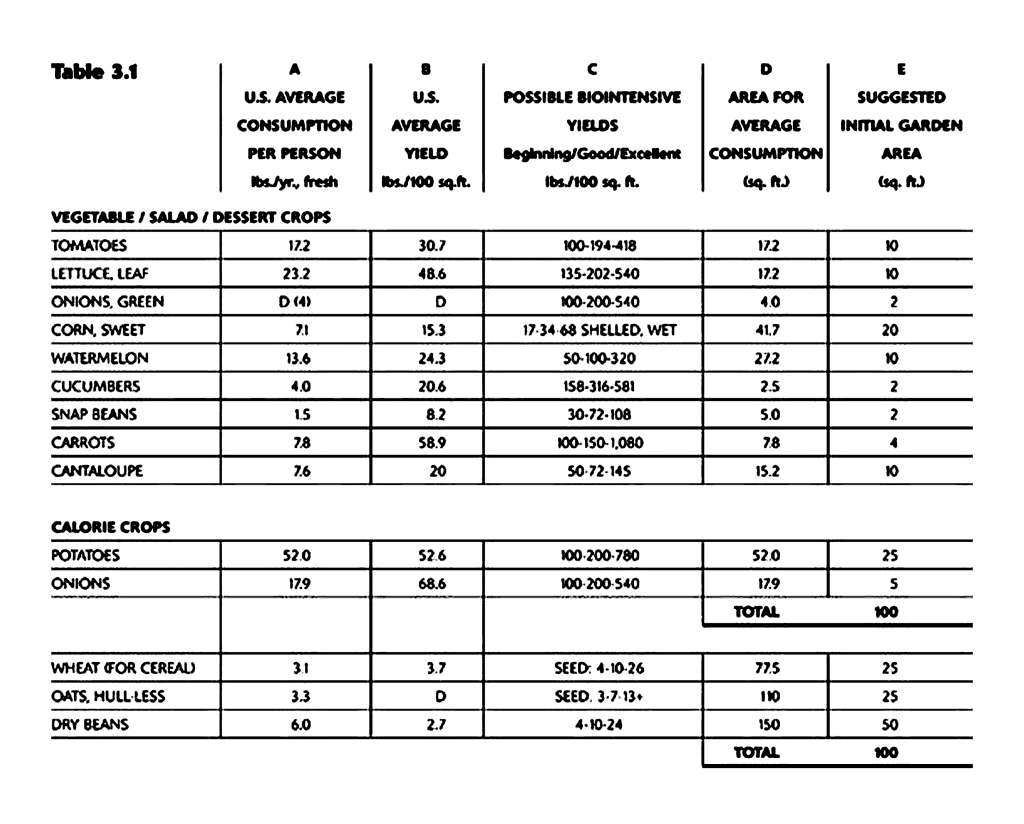
As I looked through John Jeavons’ pamphlet The Sustainable Vegetable Garden, I found myself immediately thinking about substitutions. Maybe I should replace the corn. Maybe the melons would struggle. Maybe I should dedicate more space to greens and fewer warm-season crops.
Then I stopped myself.
How do I know what needs changing if I have never actually tried the system?
Instead of redesigning everything before planting a single seed, I have decided to treat the first year as an experiment.
Following the Plan
One thing that immediately caught my attention was that Jeavons’ example garden is divided into two 100-square-foot plots.
That happens to fit my new garden almost perfectly.
Each of my cinder block beds contains roughly 100 square feet of growing space, giving me nearly the same amount of area used in the pamphlet. Rather than creating my own system from scratch, I can use his suggested layout as a starting point and see how it performs under my conditions.
I know some of the recommended crops may not be ideal for a partially shaded garden. Corn, melons, and other warm-season crops generally prefer much more sunlight than my garden receives.
Still, there is value in testing the approach as it was originally intended.
Learning Before Changing
It is tempting to assume I already know what will work and what won’t.
The reality is that experience is usually a better teacher than assumptions.
Maybe the corn will struggle.
Maybe the melons will underperform.
Maybe they will surprise me.
The only way to know for certain is to grow them and see what happens.
By following the plan closely during the first season, I will have a baseline to compare against. Future changes will be based on real observations rather than guesses.
More Than Just a Garden
This project is about more than vegetables.
For a long time, I have been thinking about moving and planning for what comes next. I still believe that a move may be in my future. At the same time, I know I am likely to be here for at least another couple of years.
That realization has changed my perspective.
Instead of putting everything on hold while waiting for the next chapter, I want to make the most of the chapter I am in.
A garden seems like a good place to start.
Even if I eventually move, the skills I learn, the harvests I gather, and the lessons I discover will go with me.
Looking Ahead
My goal for this first season is not perfection.
My goal is to observe.
I want to learn which crops thrive, which struggle, how much food the beds produce, and how well the overall system works in my front-yard garden.
Once I have a full year of experience behind me, then I can make adjustments.
Perhaps I will replace some crops with better performers.
Perhaps I will expand the crops that prove most productive.
Or perhaps I will discover that some of my assumptions were wrong.
Either way, I will be making decisions based on actual experience rather than speculation.
For now, I am going to trust the process, plant the garden, and see what happens.