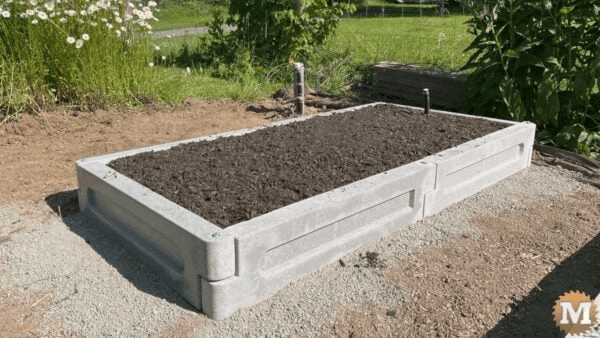
As I think more about my garden beds and about how to build them, I find myself comparing two very different approaches: using pressure‑treated lumber or using concrete molds to make permanent beds.
Pressure‑Treated Wood: Easy to Build, But Temporary
Pressure‑treated lumber is the familiar option. It’s easy to cut, easy to screw together, and easy to set in place. If someone wants a garden bed quickly, wood makes that possible. But even though it’s treated, it still has limits.
Pressure‑treated boards usually last 5–10 years before they start to bow, warp, or rot. Moisture, soil pressure, and sun eventually win. That means rebuilding the beds every so often, buying new boards, and repeating the same labor again.
The cost is lower upfront — a long bed made from pressure‑treated lumber might run $150–$300. But because it has to be replaced, the long‑term cost keeps climbing. The labor is lighter, but it’s recurring.
Concrete Molds: More Work Now, No Work Later
The idea of using molds to make concrete blocks is different. It’s more labor upfront — mixing concrete, filling molds, curing the blocks, and setting them in place. It’s heavier work, and it takes more time.
But once the blocks are made, they’re permanent.
Concrete doesn’t rot, warp, or fall apart. It doesn’t need to be replaced every decade. It doesn’t care about weather or soil pressure. The molds let me create uniform pieces that fit together cleanly, and once they’re set, the beds are done for good.
The cost is higher at the beginning. Concrete for two long beds might run $300–$700, depending on height. But unlike wood, it’s a one‑time cost. The labor is front‑loaded, and then it’s over.
The Practical Difference
When I compare the two ideas, the practicality comes down to what matters more: ease now or longevity later.
Pressure‑treated wood is cheaper and easier to build, but it’s temporary. Concrete molds take more effort and cost more upfront, but they create something permanent. One option asks for ongoing maintenance; the other asks for one solid push.
I’m thinking about what would make sense in the long run — two long garden beds that either get rebuilt every so often, or two that stay exactly the same year after year. The idea of using molds to make permanent concrete beds is starting to feel practical, even if it’s just a thought for now.
Gardening, Woodworking, Concrete Molds, Timber Frame, Aircrete | MAN About TOOLS